
Consumption-Based Pricing is forcing law firms to adopt Value-Based Pricing
Fortunately value-based pricing is much easier than many lawyers think

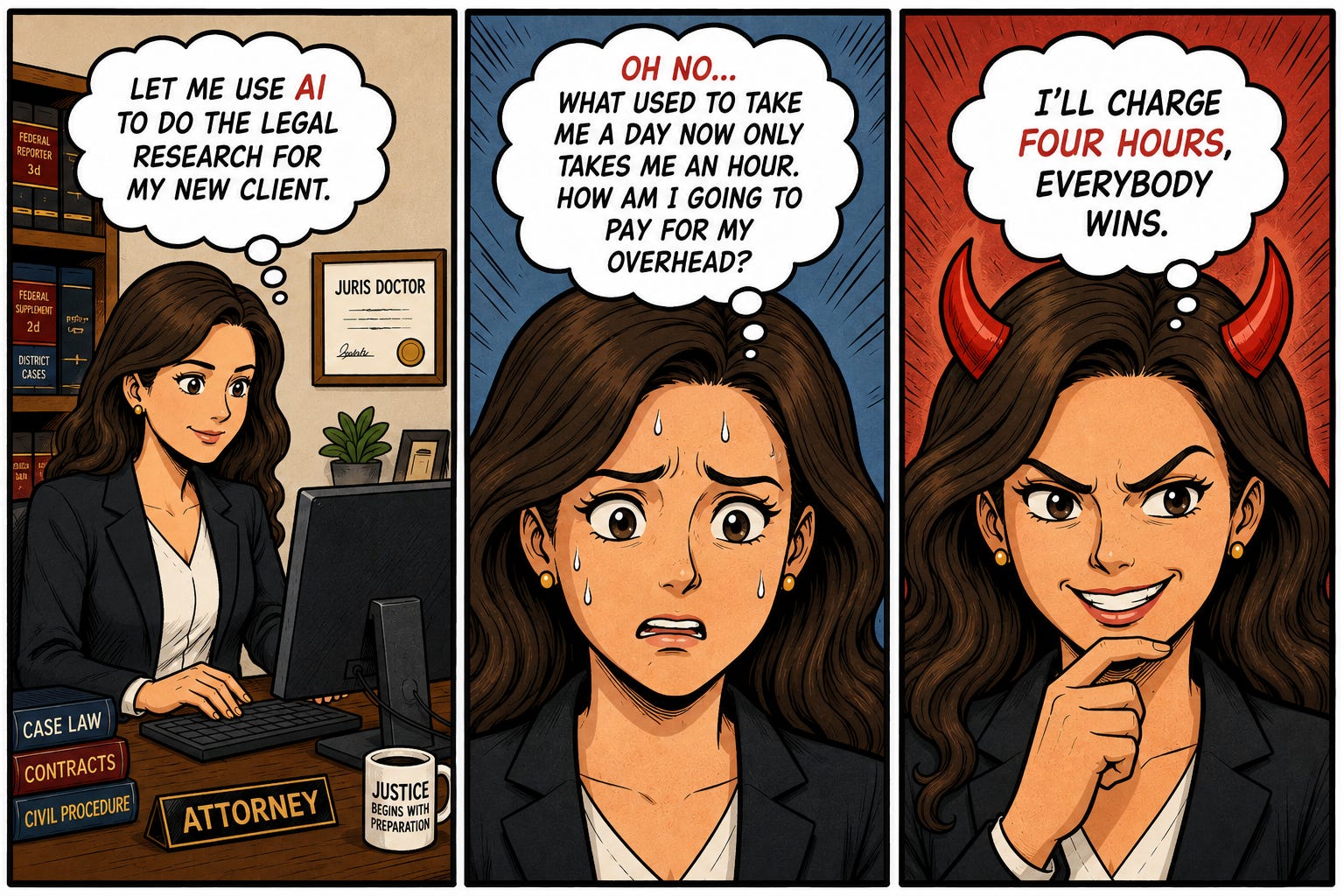
Do you recognize this conundrum?
The introduction of consumption based pricing by legal AI providers like Legora is about to make this situation even worse.
You pay per token, so you’re carrying a cost that isn’t reflected in your billable hourly rate. On top of that, AI reduces the number of hours you can bill.
As a result, your revenue declines while your costs increase.
Fortunately, there’s a solution.
Many people assume value based pricing means fixed fees.
The problem is that fixed fees are difficult when you don’t know how long a task will take. Take legal research as an example. It’s often impossible to predict in advance how much time a matter will require.
For that reason, charging by the hour is still one of the most practical pricing models.
My advice? Keep billing by the hour, but rethink what each hour is worth.
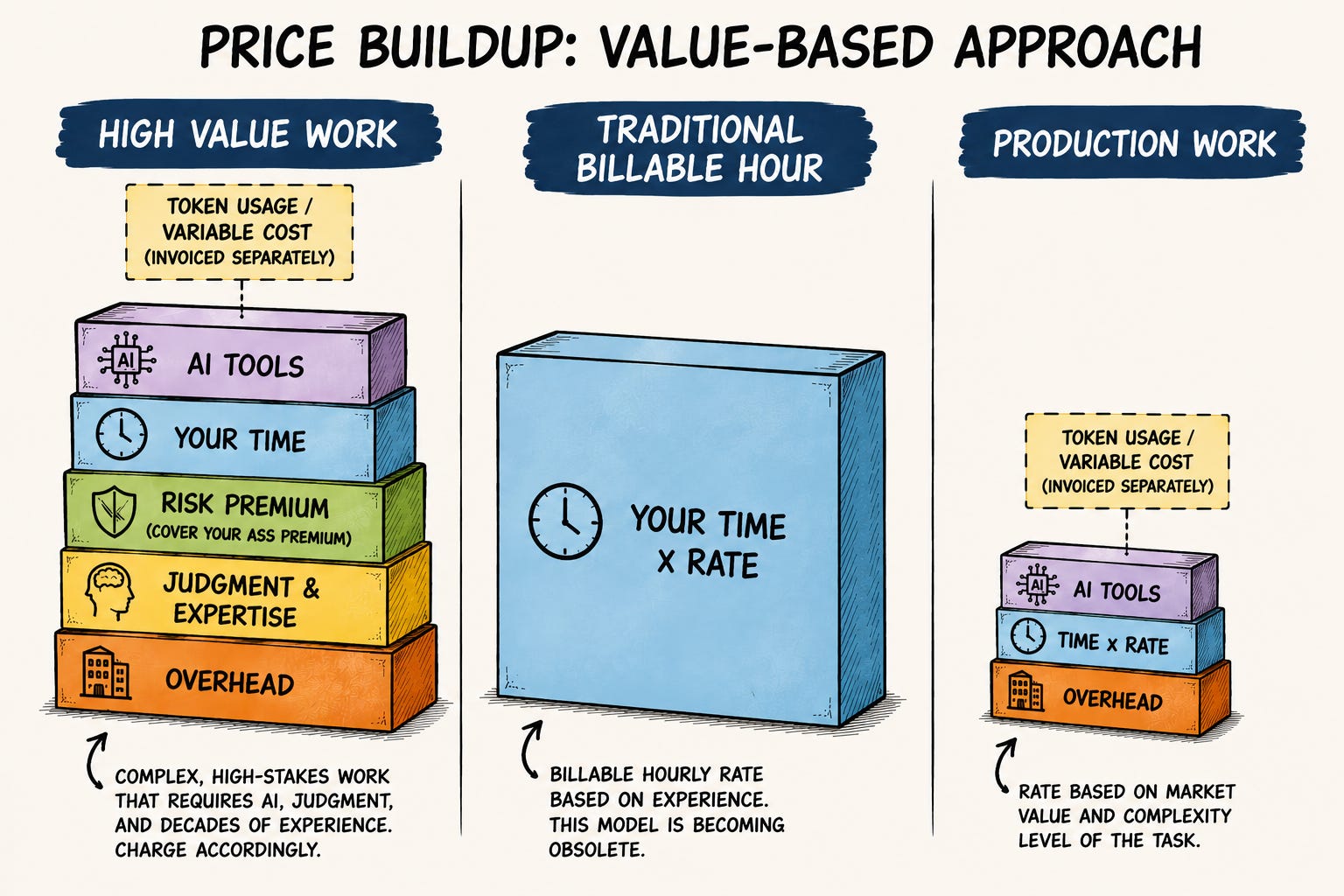
Some work combines AI, your judgment, decades of experience, and the responsibility of getting the answer right. Those hours deserve a premium.
Other work is largely production. AI can complete much of it faster and at lower cost. Those hours should be priced accordingly, based on the market value of the work and complexity of the task itself rather than the traditional associate rate.
Instead of applying one hourly rate for everything, think about the components that make up your fee:
Overhead
Judgment and expertise
Risk premium, or the “cover your ass” premium
AI tools
Your time
Token usage
Personally, I’d be transparent about token usage and charge them separately, rather than hiding them in your hourly rate.
This leads to a much more sustainable and transparent model. There’s one essential condition.
The lawyer in the comic decides on the premium after the work has been completed, without giving the client any transparency about the pricing rationale upfront.
Charging for time you didn’t spend, or padding a bill after the fact, runs into fee reasonableness rules in most jurisdictions.
Value based pricing starts before the work begins. It requires a conversation about the value you create and the price the client is willing to pay.
Ironically, for high value legal work, you may end up charging roughly what you charge today.
The difference is that AI allows you to deliver significantly better work in less time.
That’s something most clients are happy to pay for.